

VocoVision: Guided Search Improves Job Discovery
An A/B test exploring how structured, intent-based search can reduce friction in early job discovery. By introducing a guided, sentence-style search experience, users were able to identify relevant roles faster and move deeper into the funnel.
Increase in user interaction and hero CTA behavior.
Decrease in abandonment during initial form interaction.
Improvement in successful form submissions further down the funnel.
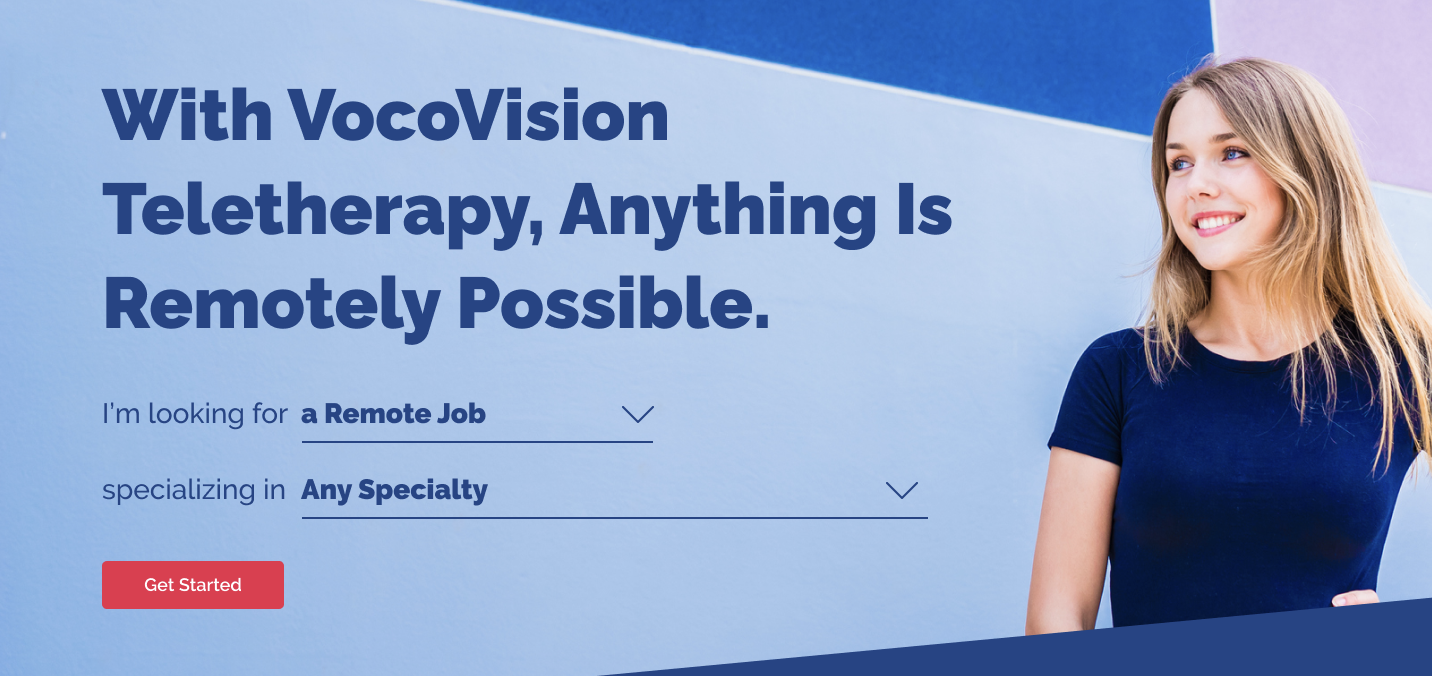
Users were landing, but not orienting
The homepage served as a primary entry point, but users struggled to quickly determine where to go next. Job seekers had to interpret multiple paths before taking action, which created hesitation and drop-off.
Core Issue
The experience required users to translate their intent into navigation decisions instead of supporting that intent directly.

Reduce friction by guiding intent instead of exposing options
We hypothesized that introducing a structured, sentence-style search would help users self-select by job type and specialty earlier in the experience.
If we...
Replace open-ended navigation with guided, intent-based input
Then...
Users will find relevant roles faster and move deeper into the funnel with less friction

Designing a guided entry experience
Instead of presenting multiple navigation choices, the experience was reframed as a single guided interaction. The goal was to reduce decision overhead and align the interface with how users naturally think about job searching.
-
Reframed search as a sentence
Users could construct their intent through structured inputs rather than navigating multiple entry points.
-
Segmented by job type and specialty
The system guided users toward relevant categories early instead of requiring downstream filtering.
-
Reduced competing actions
Primary focus was placed on job seeker pathways to simplify the entry decision.
A/B testing guided vs traditional entry
We tested a guided, sentence-style search experience against the existing homepage. The variation introduced structured input for job type and specialty directly within the hero.
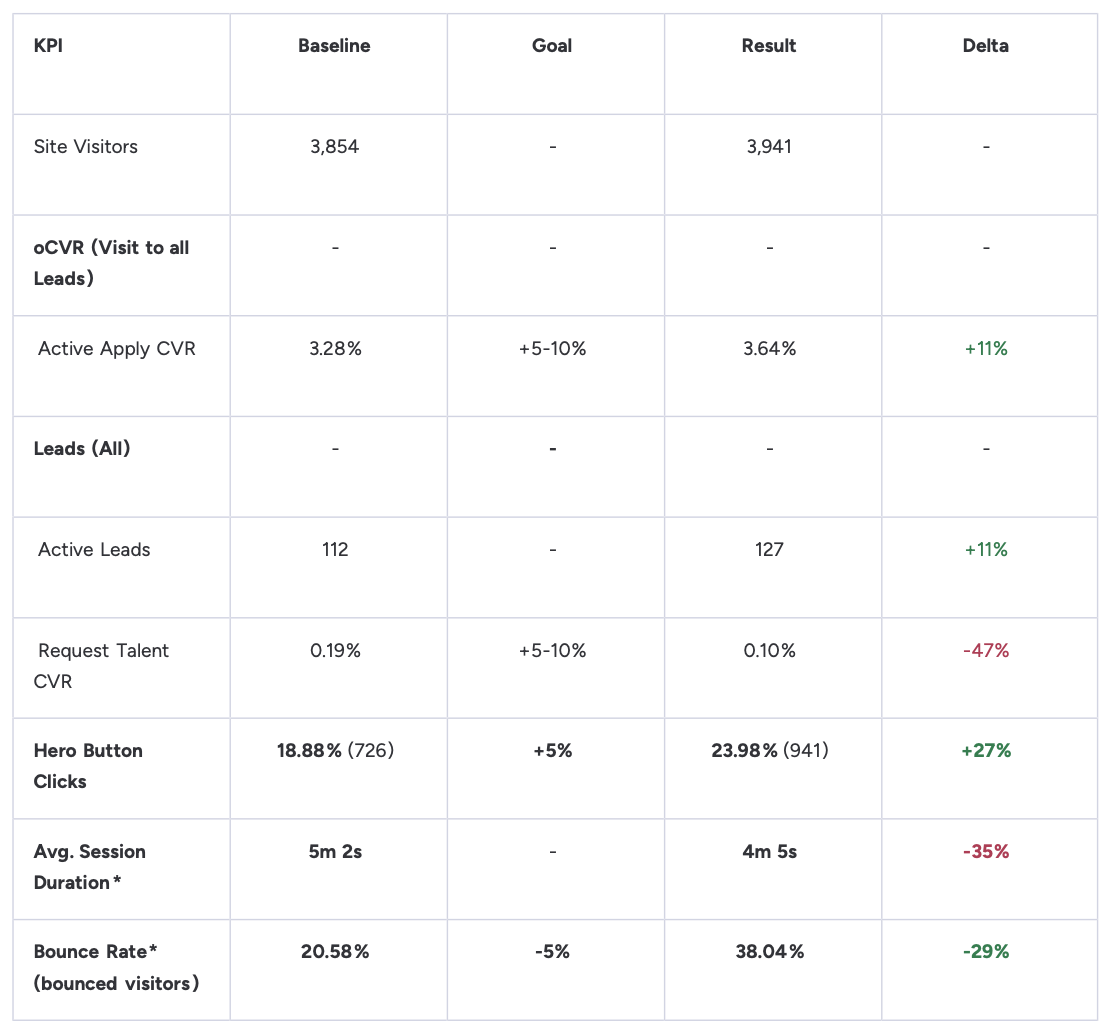
Stronger job seeker movement, mixed downstream effects
Conversions
Increase in job seeker applies compared to control
CTA Engagement
More users engaged with primary entry actions
Bounce Rate
Fewer users left without interacting
Observed Behavior Shift
Users moved through the experience faster, with shorter sessions but higher completion. This suggests reduced friction rather than reduced engagement.
Improving one path introduced friction in another
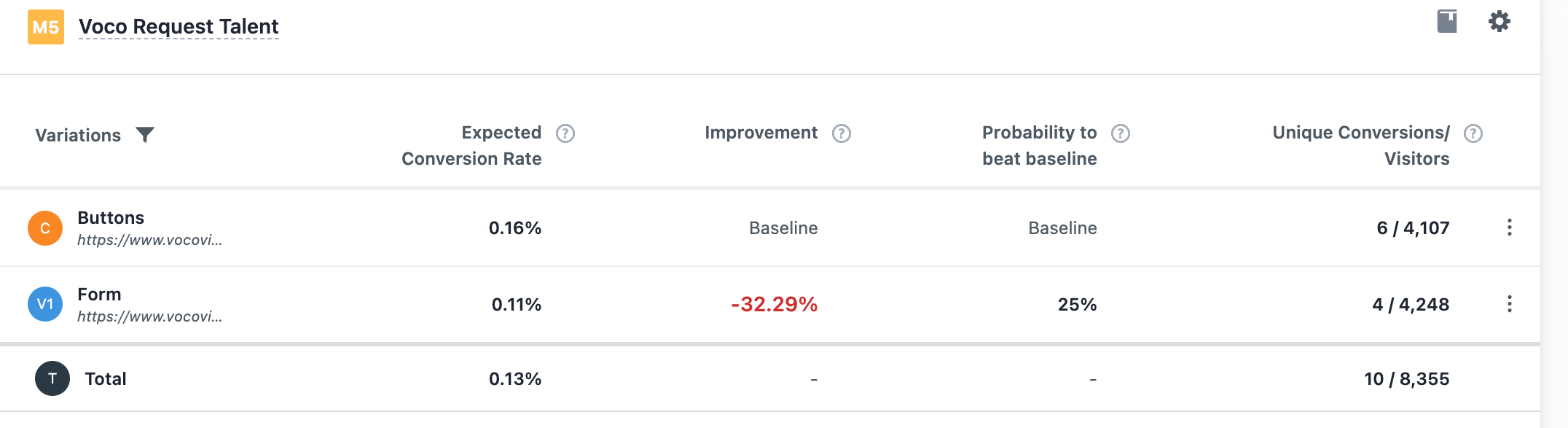
While job seeker performance improved, employer conversions decreased. The new structure deprioritized direct access to the request talent flow.
Key Tension
Optimizing for one audience at the entry point can create unintended friction for another.
Guided experiences reduce friction but reshape behavior
Users respond well to guided input when intent is clear but not easily expressed through navigation.
Shorter sessions paired with higher conversions indicate reduced friction rather than disengagement.
Homepage decisions influence multiple user groups and require careful balance between competing needs.

Refining balance between audiences
-
Reintroduce employer pathways more strategically
Explore placement outside the primary job seeker flow.
-
Test hierarchy on mobile
Evaluate visibility and engagement of guided search above the fold.
-
Continue iteration on guided search patterns
Refine how users construct intent across different specialties.